


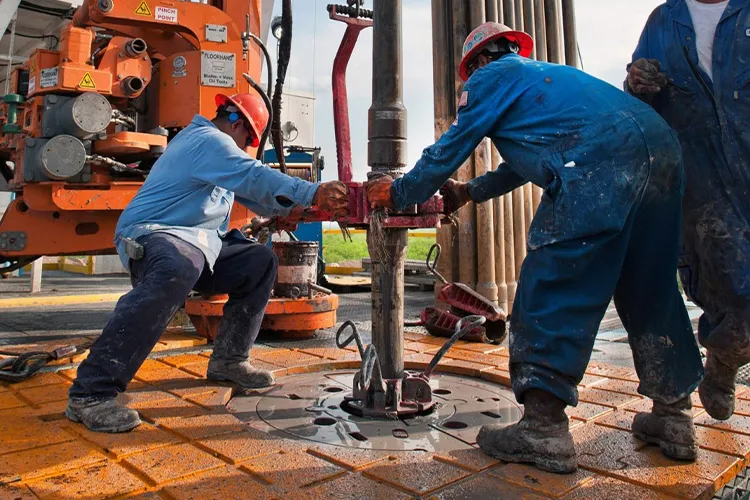
Gilsonite is a natural, resinous hydrocarbon used in drilling fluids as a lost circulation material (LCM). When drilling mud escapes into fractures or highly permeable formations, gilsonite particles bridge and plug the openings, then soften under downhole heat and pressure to seal them and help restore circulation.
Lost circulation is one of the costliest problems in oil and gas drilling. It wastes mud, stalls operations, and can trigger well-control issues. Gilsonite, a natural bitumen also marketed as natural asphalt, is widely used to control it. This guide focuses on how it performs as an LCM, how it compares with other materials, and how to apply and source it.
What Is Lost Circulation in Drilling?
Lost circulation occurs when drilling fluid flows into the formation instead of returning to the surface. It typically happens in naturally fractured zones, vugular or cavernous carbonates, depleted sands, and formations fractured by excessive mud weight.
Losses are commonly classified by rate:
| Loss Type | Typical Loss Rate | Usual Response |
|---|---|---|
| Seepage | Below 10 bbl/hr | Fine LCM in the active system |
| Partial | 10–100 bbl/hr | Graded LCM in the mud or a pill |
| Severe | Above 100 bbl/hr | High-concentration LCM pill, possibly cement or specialty plugs |
| Total | No returns | Plugging, cementing, or alternative drilling techniques |
Why Gilsonite Works as a Lost Circulation Material
Two properties make gilsonite useful for loss control. It is brittle enough to be milled into precise particle sizes, and it is thermoplastic, so it deforms as downhole temperature rises. Two mechanisms follow from this:
- Bridging and plugging: Graded particles lodge in fracture mouths and pore throats, forming a base that other solids can pack against.
- Thermal softening: Near its softening point, the material deforms and fuses, sealing microfractures more tightly than rigid particles can.
Fluid loss reduction is a separate function from plugging. If filtrate control is your main concern, see our guide to using gilsonite as a fluid loss control additive.
Gilsonite vs. Other Lost Circulation Materials
| Material | Best For | Key Limitation |
|---|---|---|
| Gilsonite | Seepage to partial losses, microfractures | Performance depends on temperature and correct sizing |
| Calcium carbonate | Permeable formations, acid-soluble sealing | Rigid particles, no thermal deformation |
| Walnut shell | Seepage and partial losses, cost-effective bridging | Can be ground down by shakers and pumps |
| Mica | Seepage losses | Flakes may degrade under shear |
| Cellulose fibers | Seepage and mat formation | Limited strength in larger fractures |
| Graphite | Wellbore strengthening | Cost and handling |
In practice, engineers often combine gilsonite with other bridging materials rather than relying on one product. A blend of fine and coarse particles seals more reliably than a single particle size.
How to Use Gilsonite in Drilling Mud
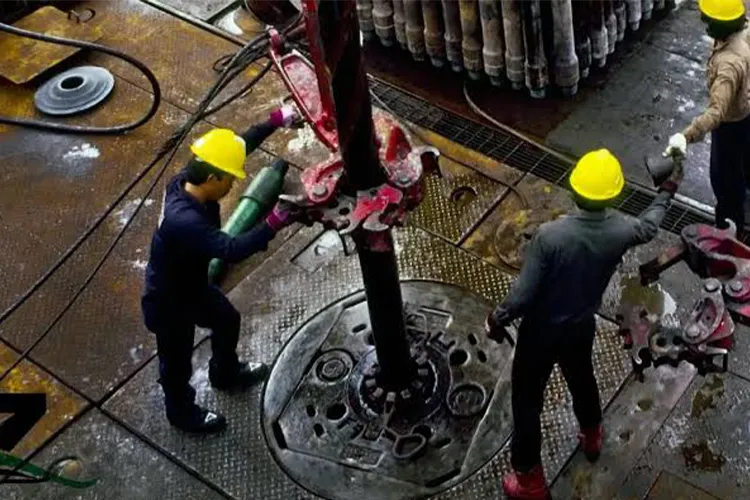
- Diagnose the loss zone: Identify loss rate, formation type, temperature, and mud system (water-based or oil-based).
- Select the grade: Micronized powder suits seepage losses. Coarser granules suit partial losses and fracture bridging.
- Set the dosage by lab test: Treatment levels vary with formation and loss severity, so confirm the concentration with permeability plugging or particle plugging tests.
- Mix and circulate: Add the material through the hopper or prepare a pill, and confirm it stays in suspension.
- Monitor and maintain: Watch returns, solids removal, and rheology. Some material is lost over the shakers and needs replenishing.
Advantages and Limitations
Advantages
- Deforms and seals rather than merely blocking
- Compatible with many water-based and oil-based systems
- Effective across a wide range of particle sizes
- Easy to blend with other LCMs
Limitations
- Softening behavior means the grade must match bottom-hole temperature
- Not a standalone fix for large vugs or cavernous losses
- Fine particles can be removed by solids control equipment
What to Check When Buying Gilsonite for Drilling
Consistent quality is essential because inconsistent material makes losses harder to predict. Key specifications include:
- Softening point: Must suit the expected downhole temperature.
- Ash content: Lower ash means a higher hydrocarbon fraction.
- Particle size: Mesh distribution affects bridging and suspension.
- Moisture and purity: Affects flowability and storage.
- Packaging: Bag type and palletizing for safe transport and handling.
Sourcing directly from a mine-owning producer improves traceability. Nikan West Gilsonite Company mines and processes gilsonite in Gillan-e-Gharb, Kermanshah Province, Iran, and exports micronized powder (80–400 mesh), granulated grades (30–40 mesh), and lump, with ash content from 0 to 25%. Products are supplied in multilayer 25 kg bags, craft bags, AD star bags, or 1 MT jumbo bags, and can be shrink-wrapped and palletized on request. The company also produces walnut shell powder, another material widely used for bridging in drilling operations.
Frequently Asked Questions
What role does gilsonite play in lost circulation control?
Gilsonite bridges and plugs fractures in the wellbore wall. It then softens under downhole heat to form a tight seal that helps restore circulation.
Is gilsonite an effective lost circulation material?
Yes, for seepage to partial losses and microfractures, especially when graded correctly and blended with other bridging materials. For large vugs or total losses, it is normally combined with plugging or cementing methods.
What mesh size is best for lost circulation?
Fine, micronized grades work best for seepage losses. Coarser granules are better for bridging larger fractures. The right choice depends on fracture width and lab test results.
Can gilsonite be used in water-based and oil-based mud?
Yes. It is used in both, but compatibility and dosage should be confirmed with a pilot test on the actual mud system.
How does temperature affect gilsonite in the wellbore?
Gilsonite softens as temperature rises. This helps it deform and seal fractures, but the softening point should match bottom-hole conditions so the material performs as intended.
How is gilsonite different from calcium carbonate as an LCM?
Calcium carbonate is a rigid, acid-soluble bridging solid, while gilsonite is a deformable hydrocarbon that seals more tightly under heat and pressure.