


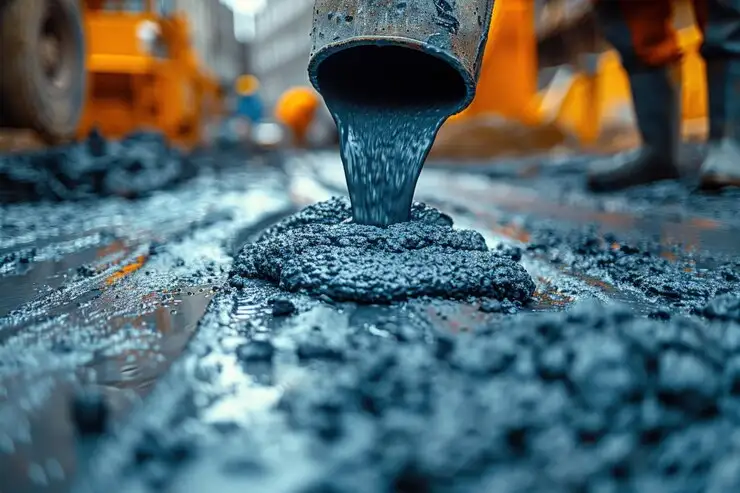
Bitumen is one of the most valuable natural resources used across a wide range of industries today. While most of the bitumen used industrially comes from crude oil refining, another type — known as gilsonite, or natural bitumen/natural asphalt — offers a distinct chemical composition and a level of quality that refined bitumen simply cannot match.
This article covers what gilsonite is, its key properties, and the most important industries and applications that rely on it.
Key Properties of Gilsonite
Gilsonite is defined by a set of properties that set it apart from conventional refined bitumen:
- High asphaltene and nitrogen content
- Excellent solubility in organic solvents
- High purity and strong compatibility with petroleum-based materials
- Natural hydrophobic (water-repellent) characteristics
- Deep black color, high luster, and notable brittleness
- Softening point typically between 160°C and 220°C
- Strong resistance to acids and bases, and non-toxic composition
A Brief History of Gilsonite
Gilsonite was first discovered in 1860, though it wasn’t until the mid-1880s that Samuel H. Gilson introduced it commercially as a moisture-resistant insulation and waterproof coating material — a use that gave the mineral its name. Commercial mining of gilsonite began in 1888, after which it steadily expanded into dozens of industrial applications worldwide.
Main Applications of Gilsonite
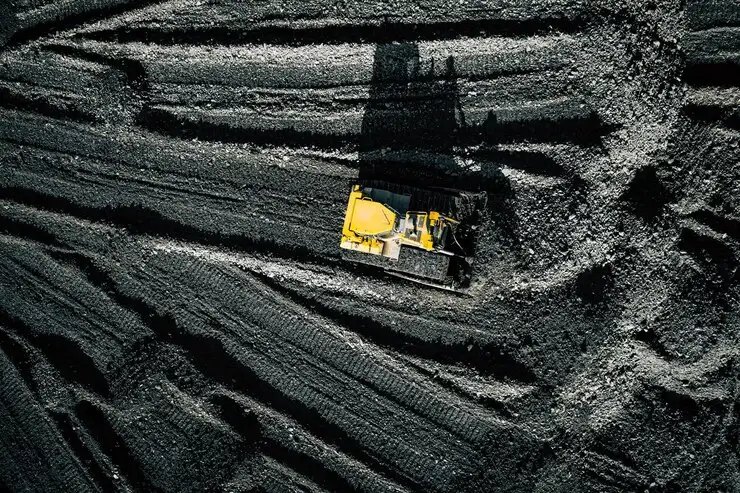
Thanks to its unique chemistry, gilsonite is now used in more than 150 industries. Below are its most significant applications.
1. Anti-Corrosion Coatings
One of gilsonite’s most notable properties is its high water resistance and hydrophobicity, which makes it a preferred raw material for anti-corrosion coatings in the oil and gas industry and beyond. Combined with complementary additives, gilsonite forms an effective insulating layer for pipelines, protecting them against corrosion, decay, and rust.
2. Asphalt Production (Road Construction)
Asphalt — a mixture of bitumen, sand, and gravel — is the primary material used in road construction. Unlike standard refined bitumen, gilsonite-modified asphalt — a form of natural asphalt — significantly improves pavement performance. Roads built with gilsonite-enhanced asphalt typically show:
- Longer service life
- Greater resistance to temperature fluctuations and weathering
- Improved structural integrity
- Higher resistance to traffic loads and pressure
- Reduced maintenance and repair needs
3. Bitumen Production
Because of its strong compatibility with petroleum-derived materials, natural bitumen plays an important role as a modifying agent in bitumen production, where it also functions as an effective moisture-insulating component.
4. Waterproofing Membranes (Isogam / Roofing Insulation)
Gilsonite is a key raw material in the production of prefabricated waterproofing membranes (known regionally as “isogam”). While various industrial bitumens can be used for this purpose, natural bitumen specifically improves shear strength, reduces layer slippage, stabilizes flexibility at low temperatures, minimizes membrane movement (making it suitable for sloped surfaces), and reduces the tendency to soften or flow at high temperatures.
5. Printing Inks and Industrial Coatings
Gilsonite is widely used in the printing and ink industry, serving as a core component in printing inks, industrial paints, and coatings. In this context, it acts as a hard resin and a dispersing agent for carbon black within industrial coating formulations. The exact ratio of gilsonite powder used in ink formulations depends on several formulation-specific factors.
6. Foundry and Casting Industry
Gilsonite is also a valuable additive in the foundry and metal casting industry. Its diverse hydrocarbon content supports cleaner, more complete casting and molding operations with fewer defects.
7. Drilling Mud and Oilfield Applications
In the oil and gas sector, gilsonite is a widely used additive in drilling mud formulations, where it functions as an effective fluid loss control additive. It helps stabilize wellbore walls, reduce fluid loss into permeable formations, and improve overall drilling fluid performance — making it a standard component in many drilling fluid systems.
Other Industrial Uses
Beyond the applications above, gilsonite is used in the steel and metal smelting industry, drilling operations, paints and resins, pharmaceuticals, automotive manufacturing, cosmetics and personal care products, chemical manufacturing, and the construction industry.
Frequently Asked Questions
What is gilsonite used for? Gilsonite is used in road construction (asphalt modification), anti-corrosion pipe coatings, waterproofing membranes, printing inks, foundry casting, drilling mud as a fluid loss control additive, and dozens of other industrial applications.
Is gilsonite the same as natural asphalt? Yes. Gilsonite is commonly referred to as natural bitumen or natural asphalt, distinguishing it from bitumen derived from crude oil refining.
Why is gilsonite used in drilling mud? Because of its strong hydrophobic properties and compatibility with drilling fluid systems, gilsonite acts as a fluid loss control additive, helping to seal permeable formations and stabilize the wellbore during drilling operations.
Final Summary
Gilsonite, or natural bitumen, is a distinct class of bitumen prized for its unique chemical composition, high viscosity, and specialized industrial properties. As a leading gilsonite producer, sourcing directly from its own gilsonite mine, Nikan West Gilsonite Company supplies high-quality gilsonite powder and related products to industries including road construction, foundry, automotive, pharmaceuticals, food and drug manufacturing, oil and gas, printing and inks, and drilling — among hundreds of other applications worldwide.