


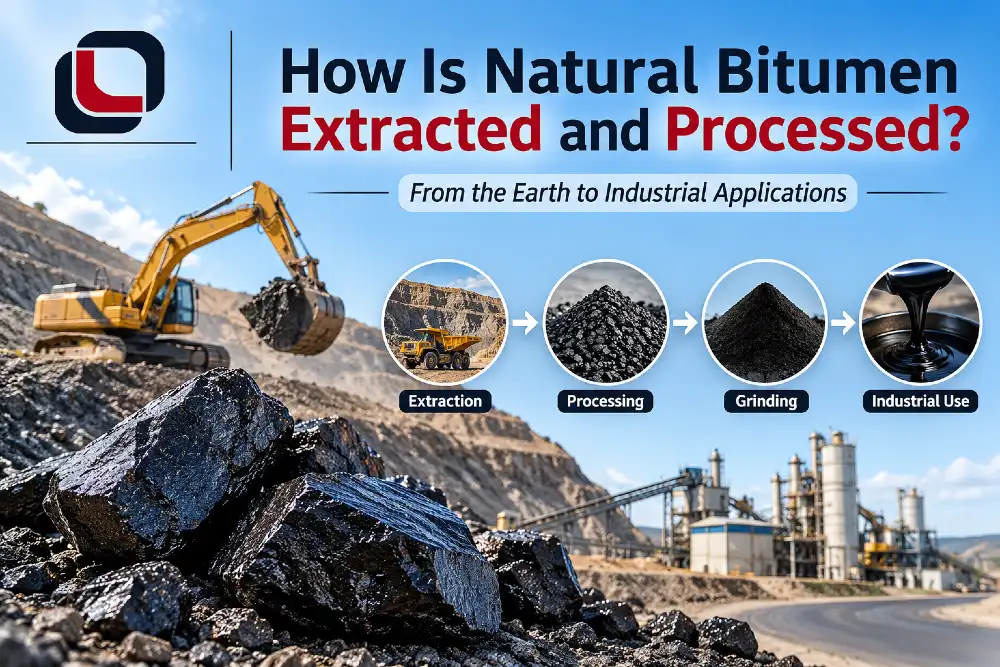
Natural bitumen is one of the most valuable naturally occurring hydrocarbon resources used in road construction, asphalt manufacturing, oil and gas drilling, waterproofing, and several other industrial applications. Its unique chemical composition, high viscosity, and resistance to water make it an important raw material for manufacturers and industrial buyers worldwide.
However, natural bitumen cannot always be used directly after extraction. Depending on its geological origin, composition, and intended application, it may require several processing stages, including mining, crushing, separation, drying, grinding, and quality control.
Understanding how natural bitumen is extracted and processed helps manufacturers select suitable materials, evaluate product quality, and make informed purchasing decisions.
In this guide, we explore the geological formation of natural bitumen, the main extraction methods, industrial processing techniques, and the factors that determine the quality of the final product. We will also examine the role of Gilsonite in modern industrial applications.
What Is Natural Bitumen?
Natural bitumen is a naturally occurring hydrocarbon material formed through geological processes over millions of years. It originates from petroleum-related organic materials that undergo physical and chemical changes underground.
Over extended periods, lighter hydrocarbon components may escape or degrade, leaving behind a heavier, thicker, and more viscous substance. Depending on its geological environment, natural bitumen can occur in different forms, including:
-
Oil sands containing bitumen mixed with sand, clay, and water.
-
Bituminous rocks in which hydrocarbons are distributed throughout mineral formations.
-
Solid asphalt deposits found in underground veins and fractures.
-
Natural asphaltite deposits such as Gilsonite.
One important distinction is that natural bitumen is not a single standardized material. Its physical and chemical properties vary depending on the deposit, geological conditions, and mineral composition.
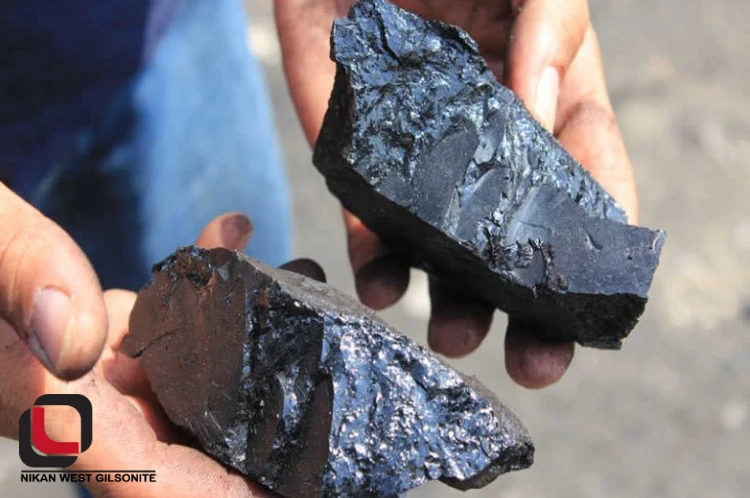
Gilsonite, also known as uintaite, is a particularly valuable type of solid natural bitumen. It is a naturally occurring hydrocarbon resin characterized by its dark color, brittleness, and relatively high softening point.
Unlike conventional oil sands bitumen, which is recovered from mixtures of sand and other materials, Gilsonite is commonly extracted from underground mineral veins using mining techniques.
This distinction is important because the extraction and processing methods depend heavily on the type of natural bitumen being recovered.
How Is Natural Bitumen Formed?
Natural bitumen develops through complex geological processes involving organic matter, petroleum migration, temperature, and pressure.
Initially, organic materials accumulate in sedimentary environments and gradually transform into hydrocarbons through burial and geological maturation.
As petroleum moves through porous rocks and underground fractures, some of its lighter components may evaporate, escape, or undergo alteration. The remaining material becomes increasingly concentrated in heavier hydrocarbons.
In certain geological environments, these deposits eventually form solid or semi-solid bituminous materials.
The location and characteristics of the deposit determine whether the material is found in oil sands, bituminous limestone, sandstone, or underground veins.
For example, Gilsonite deposits are typically associated with narrow, vertically oriented underground veins. These formations can extend considerable distances below the surface, making underground mining an appropriate extraction method.
Understanding the geological structure is therefore the first step in determining the most effective extraction strategy.
Main Methods of Natural Bitumen Extraction
The extraction method depends on the depth, geological structure, physical condition, and composition of the deposit.
Generally, natural bitumen is recovered through surface mining, underground mining, or in-situ extraction.
1. Surface Mining
Suitable for relatively shallow deposits, particularly oil sands.
Surface mining is commonly used when bitumen-containing formations are located relatively close to the ground surface.
The process generally involves removing vegetation, soil, and overburden to expose the underlying deposit. Heavy machinery, including excavators, bulldozers, and large haul trucks, is then used to extract and transport the material.
After extraction, the bitumen-containing ore is transported to a processing facility.
The main stages include:
-
Removing the overlying soil and rock.
-
Excavating the bitumen-containing material.
-
Transporting the extracted ore to processing facilities.
-
Crushing large material into smaller particles.
-
Separating bitumen from sand, clay, and water.
Surface mining is particularly useful for large deposits that can be accessed without extensive underground operations.
However, it requires significant land preparation and careful management of waste materials, water consumption, and environmental impacts.
2. Underground Mining
Commonly used for solid natural asphalt and vein-type deposits such as Gilsonite.
Underground mining is an important extraction technique for solid natural bitumen deposits located beneath the surface.
In this method, miners access underground formations through shafts, tunnels, or other mining openings. Once the deposit is reached, specialized equipment is used to remove the material.
For Gilsonite extraction, underground deposits often occur in narrow veins. Because of their geological structure, mining operations may require controlled excavation rather than the large-scale machinery used in surface mining.
The typical process involves:
-
Geological exploration to identify the location and dimensions of the deposit.
-
Developing underground access points.
-
Removing the solid bitumen using suitable mining equipment.
-
Breaking large pieces into manageable sizes.
-
Transporting the extracted material to the surface.
-
Sorting and preparing the material for further processing.
Pneumatic tools, mechanical equipment, and controlled extraction techniques can be used depending on the characteristics of the mine.
One advantage of underground mining is that it allows access to deeper deposits without removing large amounts of surface material. However, proper ventilation, ground support, worker safety, and geological monitoring are essential.
3. In-Situ Extraction
In-situ extraction is primarily used for deep oil sands deposits where conventional surface mining is not practical.
Instead of removing the entire deposit, this method makes the bitumen flow more easily underground so it can be recovered through wells.
One of the most widely used techniques is Steam-Assisted Gravity Drainage (SAGD).
The process generally involves drilling two horizontal wells into the deposit. Steam is injected through the upper well, heating the surrounding bitumen and reducing its viscosity.
As the heated bitumen becomes more mobile, gravity causes it to drain toward the lower production well, where it is pumped to the surface.
In-situ extraction is particularly useful for deep oil sands formations. However, it requires substantial energy and water management, and it is not the standard method for extracting solid vein-type materials such as Gilsonite.
How Is Natural Bitumen Processed After Extraction?
Extraction is only the first stage of natural bitumen production. The extracted material often contains impurities, mineral particles, moisture, or other substances that must be managed before the product can be used in industrial applications.
The processing method depends on whether the raw material is oil sands bitumen, bituminous rock, or solid natural asphalt such as Gilsonite.
1. Crushing and Size Reduction
The first processing stage for solid natural bitumen is usually crushing.
Large pieces of extracted material are transported to crushing equipment, where they are broken into smaller fragments. This makes the material easier to handle and prepares it for subsequent processing.
Depending on the intended application, manufacturers may use jaw crushers, impact crushers, or other industrial crushing systems.
The objective is to achieve a more consistent particle size while minimizing unnecessary material loss.
For Gilsonite, crushing is particularly important because the final product may be required in lump, granular, or powdered form.
2. Screening and Separation
After crushing, the material may pass through industrial screening equipment.
Screens separate particles according to their size and help manufacturers produce different grades of natural bitumen.
In deposits containing substantial mineral impurities, additional separation techniques may be necessary.
For example, bituminous rock may require the removal or reduction of limestone, sand, and other mineral components to obtain a more concentrated product.
Oil sands processing is different. In this case, crushed ore is mixed with heated water and transported to a separation facility. The mixture is processed in separation vessels, allowing bitumen-rich froth to separate from much of the sand and water.
Additional treatment may be required to remove residual water and fine mineral particles.
The selection of separation technology depends on the original deposit and the desired product specifications.
3. Drying and Moisture Reduction
Moisture content is an important quality parameter in natural bitumen production.
Excessive moisture can affect storage, transportation, grinding, and the performance of the material in certain industrial formulations.
Therefore, drying may be necessary after washing or other processing operations.
Industrial drying equipment can reduce moisture levels through controlled heating and airflow.
However, temperature management is important. Excessive heat can affect the physical properties of certain hydrocarbon materials.
For this reason, processing facilities must select suitable drying conditions according to the characteristics of the raw material and the manufacturer’s technical requirements.
4. Grinding and Powder Production
Grinding is one of the most important stages in producing processed natural bitumen for industrial applications.
Once the material has been cleaned, dried, and prepared, it can be transferred to grinding equipment to achieve the required particle size.
Depending on the customer’s requirements, natural bitumen may be supplied in several forms:
-
Lump: Larger pieces of natural bitumen, generally used for further processing or blending.
-
Granular: Smaller particles suitable for selected industrial applications.
-
Powder: Finely ground material used in drilling fluids, asphalt modification, coatings, and other formulations.
Different industrial applications require different particle sizes. For example, manufacturers of drilling fluid additives may need a specific powder fineness to achieve the desired performance.
Grinding equipment and screening systems are therefore selected according to the final product specification.
5. Quality Control and Laboratory Testing
Quality control is essential throughout natural bitumen production.
Even materials extracted from the same geological region may have different physical and chemical characteristics. These differences can influence their suitability for specific industrial applications.
Professional processing facilities evaluate several important parameters, including:
| Quality parameter | Why it matters |
|---|---|
| Ash content | Indicates the amount of inorganic residue |
| Moisture content | Affects handling, storage, and formulation |
| Softening point | Measures temperature-related material behavior |
| Particle size | Determines suitability for different applications |
| Specific gravity | Helps characterize material density |
| Solubility | Indicates compatibility with certain solvents and bituminous systems |
Laboratory testing helps manufacturers classify products into different grades and ensure that the material meets customer specifications.
For industrial buyers, reviewing a technical data sheet (TDS) and Certificate of Analysis (COA) is an important step before purchasing natural bitumen.
How Is Gilsonite Extracted and Processed?
Gilsonite is one of the best-known forms of solid natural bitumen. It is a naturally occurring hydrocarbon material that is typically found in underground veins.
Unlike conventional oil sands bitumen, Gilsonite is generally recovered as a solid material through mining operations.
The extraction process begins with geological exploration to identify suitable deposits. Once the mining area is established, underground operations provide access to the veins.
Miners then extract the material using appropriate mechanical tools and transport it to the processing facility.
At the processing plant, the raw material may undergo several stages:
-
Initial sorting to remove unwanted rock and foreign materials.
-
Crushing to reduce large lumps into smaller pieces.
-
Screening to classify particles according to size.
-
Drying when necessary to control moisture.
-
Grinding to produce the required powder grades.
-
Laboratory testing to verify product specifications.
-
Packaging and preparation for transportation.
The final product may be supplied as lumps, granules, or different powder mesh sizes.
The quality of Gilsonite depends on several factors, including the geological characteristics of the Gilsonite mine, ash content, moisture, softening point, and particle size.
This is why selecting an experienced Gilsonite Producer is important for companies that require consistent industrial raw materials.
Environmental Considerations in Natural Bitumen Extraction
Like other mining and hydrocarbon-related operations, natural bitumen extraction requires appropriate environmental management.
The potential environmental impacts vary depending on the extraction method, geological conditions, and scale of production.
Some important considerations include:
-
Land disturbance: Mining activities can alter natural landscapes and require rehabilitation after extraction.
-
Water management: Oil sands separation and certain cleaning operations require water resources and effective wastewater treatment.
-
Energy consumption: Crushing, drying, grinding, and in-situ extraction can require considerable energy.
-
Dust control: Mining, crushing, and powder production can generate airborne particles.
-
Waste management: Mineral residues and other processing by-products must be handled responsibly.
Modern mining and processing facilities can reduce these impacts through efficient equipment, dust collection systems, water recycling, energy management, and appropriate waste disposal practices.
Responsible production is important not only for environmental protection but also for maintaining long-term operational efficiency.
How to Choose a Reliable Natural Bitumen Supplier
For manufacturers and industrial buyers, choosing the right supplier is just as important as understanding the extraction and processing methods.
A reliable supplier should be able to provide consistent product quality, technical documentation, and suitable material grades for different industrial applications.
Before purchasing natural bitumen, consider the following factors:
-
Product specifications: Check ash content, moisture, softening point, and particle size.
-
Product availability: Ensure the supplier can provide the required quantities and grades.
-
Technical documentation: Request updated TDS and COA documents.
-
Processing capabilities: Evaluate whether the supplier can provide lumps, granules, or customized powder sizes.
-
Industry experience: Work with companies familiar with the requirements of asphalt, drilling, and other industrial sectors.
-
Supply reliability: Consider packaging, transportation arrangements, and the supplier’s ability to fulfill long-term orders.
Working with an experienced supplier can help manufacturers reduce quality variations and maintain more predictable production processes.
Nikan West Gilsonite is a company to consider when sourcing natural bitumen and Gilsonite for industrial applications. By focusing on the characteristics and specifications required by different industries, buyers can identify suitable materials for their production needs.
Whether the requirement involves drilling additives, asphalt modification, or other industrial applications, selecting the appropriate grade is essential for achieving the desired results.
Conclusion
Natural bitumen extraction and processing involve several important stages, from geological exploration and mining to crushing, separation, drying, grinding, and quality testing.
The appropriate extraction method depends on the type of deposit. While oil sands may require surface mining or in-situ recovery, solid natural asphalt deposits such as Gilsonite are commonly extracted through underground mining.
After extraction, proper processing and quality control help transform raw materials into industrial products with specific characteristics and particle sizes.
For manufacturers, construction companies, asphalt producers, and oil and gas operators, understanding these processes makes it easier to select the right material for each application.
If your business is looking for a dependable source of natural bitumen or Gilsonite, Nikan West Gilsonite can be considered for industrial sourcing requirements. Choosing the right grade, reviewing technical specifications, and working with an experienced supplier are essential steps toward achieving consistent production quality.